

Welcome to the Children’s Hour where reading to children and reading by children is considered a high priority to their success in life. Literacy begins by reading to children, but is developed over the years when great literature is available for their listening and reading enjoyment.
The best children’s books contain imaginative stories, memorable characters, beautiful illustrations, and lyrical language. Well-written stories should contain heroes and role models to imitate. Great books should be enjoyable reads, make the world a better place, and incorporate heart, humor, heroes, and hope.
Be sure to sign up for our newsletter for information on the best in children’s literature available to read and read-aloud.
Prescool Notables
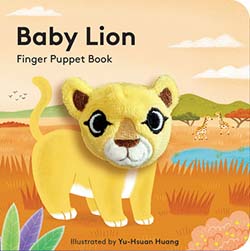
BABY LION: Finger Puppet Book
written/illus. by Yu-Hsuan Huang, (Chronicle Books, Sept. 2022, $7.99, ISBN 978-1-7972-1286-9), 12p, Ages 1-3
Little ones will love touching, feeling, and snuggling up with Baby Lion as she plays, pounces, rolls with her friends, snuggles with mommy, takes a bath, and explores the Savanna.
Themes: Adventure, Animals, Families, Series
Other Finger Puppet Books: Baby Bear, Baby Bunny, Baby Chipmunk, Baby Duck, Baby Elephant, Baby Fish, Baby Fox, Baby Giraffe, Baby Hedgehog, Baby Hippo, Baby Kitten, Baby Koala, Baby Llama, Baby Narwhal, Baby Octopus, Baby Orca, Baby Otter, Baby Piglet, Baby Puppy, Baby Raccoon, Baby T. Rex, Baby Tiger, Baby Unicorn, Baby Yeti
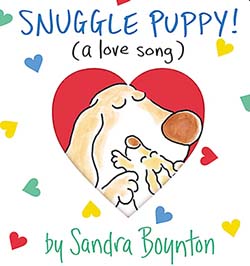
10 SNUGGLE PUPPY
written/illus. by Sandra Boynton (Boynton Bookworks, ($7.99, Sept 2022, ISBN 978-1-6659-2498-6), 24p, Ages 3+
Snuggle up with a love song, a kiss, and a hug for your child as you read this year-round valentine. “Ooo! SNUGGLE PUPPY of Mine! / EVERYTHING ABOUT you is especially FINE!”
Snuggle Puppy is told that he is loved for himself, for the many things that he does --- balancing a ball, at the beach, in the snow, stomping in fall leaves. Kids will love the cookies, kisses, and hugs throughout.
Themes: Animals, Concept, Humor, Rhythm & Rhyme, Series
Other Books in the Series: On Board | Pajama Time! | Hey! Wake Up! | Dinosnores | Birthday Monsters! | Barnyard Dance! | Fifteen Animals! | Perfect Piggies! | Tickle Time! | Belly button Book! | One, Two, Three! | Bunny Rabbit Show! | Your Personal Penguin | Oh My Oh My Oh Dinosaurs! | EEK! Halloween! | Woodland Dance! Peekaboo Rex!
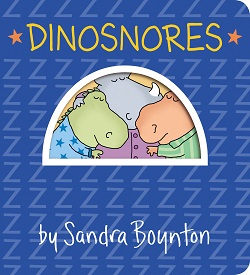
DINOSNORES
written/illus. by Sandra Boynton (Boynton Bookworks, ($7.99, 2019, ISBN 978-1-6659-2496-2), 24p, Ages 3+
Told in rhyme, kids will slip off to dreamland after listening to this cute story of the bedtime ritual of several dinosaurs. “When the sun has gone down and the blue stars appear / Then the dinosaurs know that their bedtime is near.” They brush their teeth, wash their faces, stretch, put on their pajamas, yawn, close their eyes, settle down to sleep, and dreamland. Then, the loud snoring begins. ‘HONK SHOOOOOO!” all through the night. Kids will love the silliness of Sandra Boynton books, especially two little bunnies, who are glad the noise is very far away.
Themes: Animals, Bedtime, Dinosaurs, Humor, Rhythm & Rhyme, Series
Other Book in the Series: On Board | Pajama Time! | Hey! Wake Up! | Snuggle Puppy! | Birthday Monsters! | Barnyard Dance! | Fifteen Animals! | Perfect Piggies! | Tickle Time! | Belly button Book! | One, Two, Three! | Bunny Rabbit Show! | Your Personal Penguin | Oh My Oh My Oh Dinosaurs! | EEK! Halloween! | Woodland Dance! Peekaboo Rex!
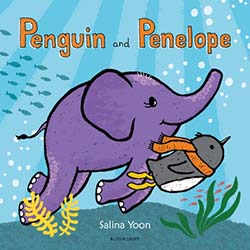
PENGUIN AND PENELOPE
written/illus. by Salina Yoon, (Bloomsbury Children’s Books, $17.99, Sept. 2022, ISBN 978-1-68119-344-1), 40p, Ages 3-6
When Penguin comes across a baby elephant stuck in the mud, he rescues Penelope, gives her food, water, a bath, and helps her find her home. Following the tracks of the herd, they are stymied by a huge ravine but press on to find another
way. As the trip grows longer, little Penelope grows bigger as well as their friendship. When Penelope wishes she could fly like the birds, Penguin shows her a different way to fly. They eventually reunite with the herd, and before Penguin leaves, he shares his scarf with her as a reminder of their friendship. “But Penelope had a hole in her heart that was the size of a penguin.” Find out how they reunite and enjoy flying together forever. Kids are sure to enjoy this sweet tale of friendship, kindness, and learning to fly.
Themes: Adventure, Animals, Friendship, Heroes, Series
Other books about Penguin: Penguin and Pinecone | Penguin on Vacation | Penguin in Love | Penguin’s Big Adventure | Penguin and Pumpkin | Penguin’s Christmas Wish
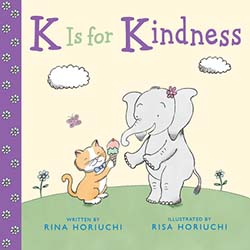
K IS FOR KINDNESS
written by Rina Horiuchi, illus. by Risa Horiuchi, (Viking Books for Young Readers, $17.99, April 2022, ISBN 978-0-593-35162-8), 32p, Ages 3-7
In this delightful rhyming alphabet picture book animal friends illustrate many ways to care for one another. Each page features an upper- and lower-case letter and illustrates a way to be kind. “Ape picks an apple for Aardvark below. / Bat puts a
bandage on Brown Bear’s big toe.” An Elephant helps an Eagle find lost glasses, a Fox repairs a Frog’s fire truck, a Lion helps a Ladybug with her luggage, and on to the end of the alphabet, “Yorkie gives Yak her old yo-yo to keep. / Zebra rocks Baby, who’s zonked out asleep.” End pages remind readers and listeners to think of a kind and nice thing they might do. The concept of kindness can be challenging, but this ABC book presents a warm and gentle way to teach young children kindness as well as and their ABC’s.
Themes: Animals, Concept, Friendship, Heroes, Rhythm & Rhyme
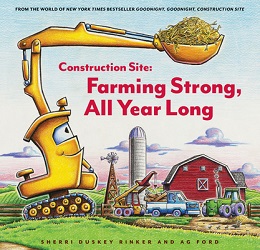
CONSTRUCTION SITE: FARMING STRONG, ALL YEAR LONG
written by Sherri Duskey Rinker, illus. by A. G. Ford, (Chronicle Books, $17.99, Nov. 2022, ISBN 978-1-7972-1387-3), 16p, Ages 3-7
Spring has arrived and the six beloved trucks from the Construction Site series, Excavator, Bulldozer, Skid Steer, Crane Truck, Dump Truck, and Cement Mixer, help on a busy farm to repair a road, prepare
the ground for planting, plant crops, and repair pens for the animals. In Summer they help water the crops, bale the hay and wheat, dig holes for posts, haul away debris, pour cement, and build a barn.
As the days grow cooler and Fall sets in, they help harvest the crops, haul the grain to town, and harvest the pumpkins. In Winter the snow needs clearing, the roof need fixing, and they help bale the hay. “For friends they have and work they do, / for sunshine, rain, and crops that grew. / All set for springtime days ahead. / But now it’s nighttime. Time for bed.”
Themes: Adventure, Machines, Rhythm & Rhyme, Series
Other Books in the Series: Construction Site: Road Crew Coming Through! | Three Cheers for Kid McGear! | Mighty, Mighty Construction Site! | Goodnight, Goodnight, Construction Site! | Steam Train, Dream Train | Construction Site: Merry and Bright | Construction Site on Christmas Night | Construction Sire Mission: Demolition
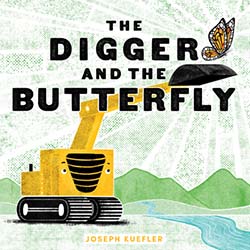
THE DIGGER AND THE BUTTERFLY
written/illus. by Joseph Kuefler, (Balzer + Bray, May 2023), 48p, Ages 3-7
Joseph Kuefler’s latest addition to his Digger series finds Digger and his construction crew working hard on a new construction site, until one day -- “Digger and Scoops uncovered a caterpillar. Good morning said Digger. Did we wake you? Asked Scoops.” After consuming a large number of green leaves, supplied by Digger and Scoops, the caterpillar decides to weave its cocoon in Digger’s bucket. When the other machines keep working, Digger decides to take a break and wait for the caterpillar to emerge. While waiting, Digger notices and begins to appreciate the world around him.
When the caterpillar emerges as a butterfly, the crew takes notice, stops working, and follows it down the river where the butterflies live. “There, among the flowers and trees, Digger and the crew played with their new friends.” Kids will enjoy this clever book about caring for nature and the end papers that present each stage of a caterpillar’s life and protection of their habitats.
Themes: Adventure Friendship, Insects, Machines, Series
Other Book in Series: The Digger and the Flower #1 | The Digger and the Duckling #2
Notables 4-8 Years
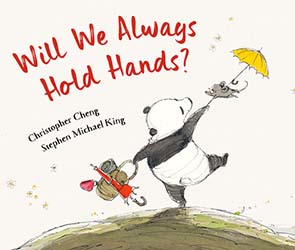
WILL WE ALWAYS HOLD HANDS?
written by Christopher Cheng, illus. by Stephen Michael King, (Random House Studio, $18.99, Nov. 2022, ISBN 978-0-593-56450-9), 40p, Ages 4-7
“Bear,” said Rat. “I’ve been wondering. Will we always hold hands like this, even when we are old and wrinkly . . . and tottering up this hill?” / “Of course we will,” said Bear. “As long as you hold mine when my fur turns gray and starts to fall out. I’ll even hold your tail so you don’t trip over it.”
In a lovely tale of kindness between best friends, Rat presents a series of “what if” questions to his best friend Bear, and Bear always answers with kindness, goodness, gentleness, and love. In good times or bad times, rain or shine, Bear tells his friend that they will always be together in health, sickness, crankiness, loud snoring, old age, crossing rivers, searching for food, and even through injuries. When Rat asks the hardest question of all, (“What if I have to leave and go somewhere you can’t come?”), find out Bear’s perfect answer in this beautiful story of love and friendship for all time. Kids will love the marvelous illustrations, the umbrellas, reading glasses, tea party, and loyalty of two best friends. Adults may need a tissue.
Themes: Adventure, Animals, Bears, Concept, Friendship, Heroes
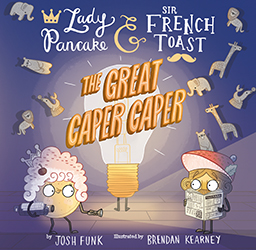
LADY PANCAKE & SIR FRENCH TOAST: THE GREAT CAPER CAPER
written by Josh Funk, illus. by Brendan Kearney, (Union Square Kids, $17.99, Nov. 2022, ISBN 978-1-4549-4363-1), 40p, Ages 4-8
“Deep in the fridge and a bit before dawn, / In their apartment, the curtains still drawn. / Slept Lady Pancake, adrift in a dream, / When, suddenly, Sir
French Toast let out a scream!” With the refrigerator in complete darkness, Toast knows someone stole the light. But who? Count Caper in the veggies claimed no knowledge of the light. Unconvinced, Toast develops an intricate plan to find the missing light. With the help of Baron von Waffle, Miss Brie, Tofu, Professor Biscotti, the Fruitcake, Beets, and Inspector Croissant, they assemble blueprints and supplies to find the real culprit. Kids will love the solution to the mystery, the “Berry Manilow Show” and the “Fabulous Las Veggies”.
Themes: Adventure, Food, Friendship, Humor, Mysteries, Rhythm & Rhyme, Series
Other Books in the Series: Lady Pancake and Sir French Toast #1 | The Case of the Stinky Stench #2 | Mission Defrostable #3 | Short & Sweet #4
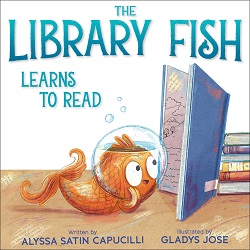
THE LIBRARY FISH LEARNS TO READ
written by Alyssa Satin Capucilli, illus. by Gladys Jose, (Simon & Schuster/Paula Wiseman Books, (Feb. 2023, $18.99, ISBN 978-1-5344-7707-0), 32p, Ages 5-8
“Library Fish loved her home on the desk of Mr. Hughes, the librarian. It was the perfect place to welcome every visitor to the library. From where
she sat, Library Fish could check each book that was borrowed and returned.” But she especially loved Storytime when Mr. Hughes read to the children.
When he shares a book about a dog learning to read, a whole new world opens up for the Library Fish, and she is captivated and determined to learn to read. “Hour after hour, night after night, she made sure she knew every letter and each sound it made. F for fish was one of her favorites. Z-z-z-z’s were always welcome after a long night’s work.” Finally, after long nights, she is now an official reader and is delighted to share with her friend, the Bookmobile. Kids will enjoy this cute, extraordinary small fish and the joy she found in learning to read.
Themes: Adventure, Animals, Friendship, Heroes, Humor, Inventions, Oceans
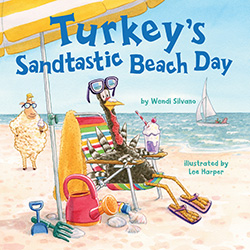
TURKEY’S SANDTASTIC BEACH DAY
written by Wendi Silvano, illus. by Lee Harper, (Two Lions, May 2023, $17.99, ISBN 978-1662508356), 40p, Ages 4-7
Turkey is excited to visit the ocean but must stay with Farmer Jake’s petting zoo on the boardwalk for the Summer Children’s Festival. Sad that he’s unable to walk on the beach, the farm animals help him sneak down, disguised as a crab (Pig reminds him to walk sideways), a seashell (to sunbathe), a surfer (to hang ten), and a snorkeler with fins (shark alert). Unfortunately, Turkey doesn’t fool the lifeguard or Farmer Jake and is always returned to the festival. When Farmer Jake takes a nap, Rooster reminds Turkey of a sand-sculpture contest on the beach, and all the animals participate in making “Turkey Town” which turns out to be the winning sculpture and a house on their own private beach. Kids will love the delightful puns throughout the clever story, root for Turkey’s efforts to enjoy the beach, and love the animals who give Turkey his most enjoyable “Santastic Beach Day”.
Themes: Adventure, Animals, Humor, Series
Other Books in the Series: Turkey Trouble #1 | Turkey Claus #2 | Turkey Trick or Treat #3 | Turkey’s Eggcellent Easter #4 | Turkey Goes to School #5 | Turkey’s Valentine Surprise #6
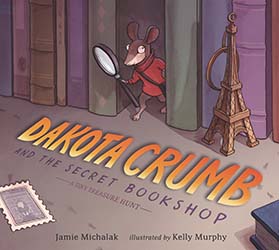
DAKOTA CRUMB AND THE SECRET WORKSHOP: A Tiny Treasure Hunt
written by Jamie Michalak, illus. by Kelly Murphy, (Candlewick Press, $17.99, May 2023, ISBN 978-1-5362-2230-9), 32p, Ages 5+
In this second book in the Dakota Crumb series, the cute little mouse detective receives a request from her cousin, Julien, to find a rare book of lost treasures somewhere in Paris. Using a clue to find
the bookshop, Dakota enters and discovers more clues – a crown, a heart, a small cake with a note to look up, and a sign “Beware of Cats”. When she
finds a mysterious open door among two cat bookends, Dakota discovers a wonderful surprise inside just for her.
Kids will love this brave and daring little treasure hunter who avoids dangerous enemies to search for clues. End pages invite kids to take their own treasure hunt and explore the bookshop again using a page from her surprise.
Themes: Adventure, Animals, Heroes, Humor, Mysteries & Detectives, Series
Other Book in the Series: Dakota Crumb: Tiny Treasure Hunter
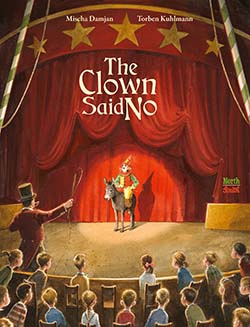
THE CLOWN SAID NO
written by Mischa Damjam, illus. by Torben Kuhlmann, (NorthSouth Books, 2022, $17.95, ISBN 978-0-7358-4476-6), 32p, ages 5-8
When a circus came to town, Petronius is presented as “the funniest clown in the world, together with his stubborn donkey, Theodore.” The lights came up and the band
began to play, but Petronius and refused to entertain the audience. Theodore also refused and “waggled his ears from left to right and from right to left” to also say no. It seemed that Petronius was tired of being a foolish clown and desired to tell stories. Ferdinand the dancing pony, Luise the giraffe, Augustus the lion, and Otto the dog were also tired of doing tricks.
Packing up their belongings, the six entertainers leave, set up camp, and dream of having their own circus, but realize they need to earn money to buy a circus tent. Luise works lighting streetlamps every evening and putting them out at midnight. Ferdinand pulls a milk cart to a dairy. Earning enough money, the six friends move to a larger town, put up a tent, paint posters, and finally open the “Circus for Children and Poets” Find out how their lovely performances and Petronius’ stories charm and win over every child and adult in town. Kids and adults will love the magnificent illustrations and root for the brave performers who wanted a change of life.
Themes: Adventure, Animals, Friendship, Heroes
Notables Ages 7-10
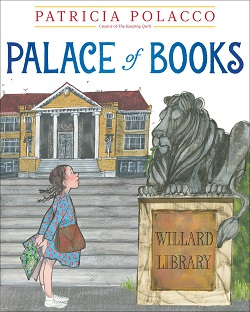
PALACE OF BOOKS
written/illus. by Patricia Polacco, (Paula Wiseman/Simon & Schuster Books for Young Readers, $18.99, March 2023, ISBN 978-1-5344-5131-5), 56p, Ages 7-10
Patricia Polacco reminisces of the time when her family moved to Battle Creek, Michigan, where she meets a kind librarian, Mrs. Creavy, who introduces her to the wonders of the library and its amazing books about birds that she loves. Upon discovering the books of John James Audubon, famous for his paintings of nature and birds, she is overwhelmed, and it is Mrs. Creavy who helps her to become the first member of the Audubon bird club of Fremont Elementary. Kids who love birds and libraries will appreciate this interesting story.
Themes: Adventure, Friendship, Libraries
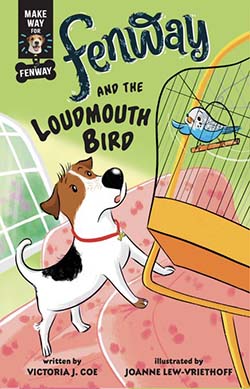
FENWAY AND THE LOUDMOUTH BIRD
written by Victoria J. Coe, illus. by Joanne Lew-Vriethoff, (G.P. Putnam’s Sons Books for Young Readers, $15.99, Apr. 2023, ISBN 978-0-593-40697-7), 96p, Ages 7+
Fenway is “A little dog with a GIANT personality.” Surprise is just around the corner for Fenway when he accompanies his human, Hattie, to visit her
grandmother. He meets Merlin, a very loud bird, who speaks human. From then on Fenway vows to keep Hattie safe from “the loudmouth bird”. There is no way that they will ever be friends with Merlin screeching “HELLO” constantly.
After Hattie and her grandmother leave, Fenway hears Merlin screeching “FENWAY, FENWAY, and realizes something is wrong. Merlin’s bell is missing! Find out how two pets can become friends, manage to communicate with each other, and find peace and contentment in this newest heartwarming and humorous Make Way for Fenway chapter book.
Themes: Animals, Families, Friendship, Heroes, Series
Other Books in the Series:
Fenway and the Bone Thieves | Fenway and the Frisbee Trick
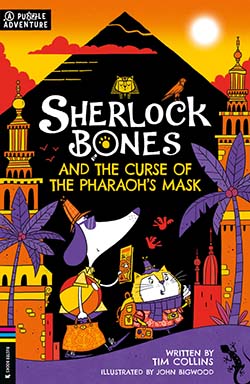
SHERLOCK BONES AND THE CURSE OF THE PHARAOH’S MASK
written by Tim Collins, illus. by John Bigwood, (Buster Books, 2023, $9.99, ISBN 978-1-78055-751-9), 192p, ages 7-10
This second adventure in the Sherlock Bones series finds dog detective Sherlock and his trusty sidekick Dr Catson taking a well-deserved vacation on the Nile River to visit the tomb of
King Tutancatmun. They look forward to seeing the recently discovered golden mask of the old cat pharaoh but are warned of a bad luck curse on those who enter the tomb. When the mask mysteriously disappears, Sherlock and Catson are blamed for the theft, but find a new entrance to the tomb and learn that Sherlock’s mortal enemy, Moriratty, is also in Egypt. Kids will love the interactive puzzles, search games, diagrams, mazes, the crazy tour group, the mysterious cat’s eye, and enjoy how the crime is cleverly solved.
Themes: Adventure, Animals, Heroes, Humor, Mysteries, Series
Other Book in Series: Sherlock Bones and the Case of the Crown Jewels #1 | Sherlock Bones and the Case of the Vanishing Magician: A Puzzle Quest #3
Notables Ages 8-12
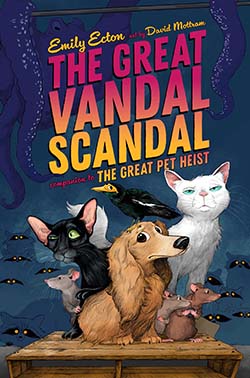
THE GREAT VANDAL SCANDAL
(The Great Pet Heist)
written by Emily Ecton, illus. by Dave Mottram, (Atheneum Books for Young Readers, $17.99, April 2023, ISBN 978-1-6659-1905-0), 240p, Ages 8-12
This third tale in The Great Pet Heist series finds spaniel Butterbean and his detective friends investigating a break-in at the Strathmore
apartment’s basement. When the Yorkie named Biscuit, from the second floor, faces eviction for barking at the intruders and Madison is blamed for vandalism, the group takes matters into their own paws and claws.
Butterbean, Walt the cat, Oscar the myna bird, pet rats Marco and Polo, Chad the resident octopus, Wallace the wild rat, and the white cat go undercover to prove Madison’s innocence and discover a group of mischievous raccoons that sneak beneath the cameras to forage. When polite requests and threats do not work with the raccoons, the animals decide it’s time for a more creative solution.
Kids will love the clever animals, especially Butterbean who yearns to become a therapy dog, Chad who works for food, and the performing raccoons in this wild third adventure caper.
Themes: Adventure, Animals, Heroes, Humor, Families, Friendship, Pets, Series
Other Books in the Series: The Great Pet Heist | The Great Ghost Hoax #2
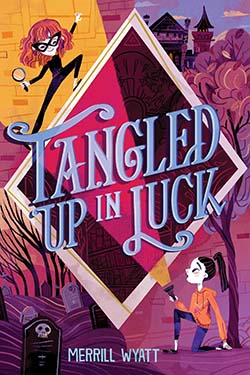
TANGLED UP IN LUCK
written by Merrill Wyatt, (Margaret K. McElderry Books, $17.99, Nov. 2021, ISBN 978-1-5344-9579-1), 256p, Ages 9-12
Sloane Osburn and Amelia Miller-Poe, seventh grade enemies, are partnered together for a class project to find missing jewels from an estate in Wauseon, Ohio since 1887. Little do they realize that their teacher was tricked into using their seventh-grade class to investigate the mystery of a long-missing treasure. Their relationship grows as they learn to work together despite a classmate’s efforts to sabotage their relationship and assignment and the effort of a leading citizen to harm them.
From an old mansion, converted into a bed-and-breakfast, to the town cemetery, these enemies turned partners discover friendship and just maybe a career in sleuthing. The author includes a cast of characters at the beginning of the book to help readers with multigenerational characters. Kids will enjoy this fun-filled mystery, especially Sloane and Amelia’s idea of serendipity (really, really good luck) and zemblanity (really, really bad luck).
Themes: Adventure, Friendship, Heroes, Mystery, Series
Other Book in the Series: Tangled Up in Nonsense
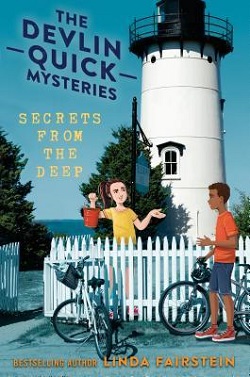
SECRETS FROM THE DEEP (The Devlin Quick Mysteries)
written by Linda Fairstein, (Dial Books, $16.99, 2018, ISBN 978-0-399-18649-3), 288p, Ages 9-12
“It’s the end of summer, and tween sleuth Devlin Quick is on vacation in Martha’s Vineyard with her best friend Booker’s family. It’s not all fun in the sun though. Dev has a science project for school:
to take a daily sample of water from the Vineyard Sound and submit it to an oceanographic DNA lab. From that, the lab can actually tell you what species of fish have been in those waters.
Then Devlin and her friends scoop up something unexpected—a real gold doubloon from the days when pirates hid treasures along the New England coastline! As the daughter of the New York City Police Commissioner, Dev knows that finders aren’t always keepers, so she’s determined to figure out the doubloon’s rightful owner. But solving that mystery is easier said than done, especially when it turns out that someone on the island wants the doubloon’s secrets to stay buried.”
Pub Syn
Themes: Adventure, Friendship, Heroes, Mysteries, Series
Other Books by Elise Broach: Into the Lion’s Den #1 | Digging for Trouble #2
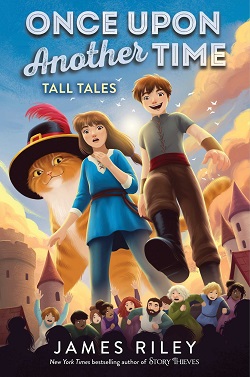
TALL TALES
Once Upon Another Time
written by James Riley, (Aladdin Books, 2022, $18.99, ISBN 978-1-5344-2590-3), 320p, Ages 9-12
“Lena might finally be accepted by the other giants after she helped defeat the Golden King and his faceless army in the Cursed City, but that doesn’t mean life’s any easier for her. The power-hungry Golden King wants revenge and has begun spreading shadow magic across the kingdoms. His magic takes over the mind of anyone it touches, instilling fear and hatred as it goes.
But Lena and her genie friend, Jin, can handle that, right? Not according to the Last Knight, who changes everything Lena thought she knew about herself by divulging a horrible secret.`And he’s not the only one. The fairy queens—godmothers to some and protectors of the realm—reveal to Lena that, according to the fairies’ The Tales of All Things, she is the only one who can defeat the Golden King and his shadow magic and that she can only do it if she first proves herself worthy.
All Lena ever wanted was to be accepted as she was. But after learning that secret from the Last Knight, she’s not even sure who that is anymore or what it means to be “worthy.” Can she and Jin save the human world that doesn’t trust them, or will they fall prey to shadow magic and doom everything?”
Pub Syn
Themes: Adventure, Folk Literature, Friendship, Heroes, Series
Notables Ages 10-13
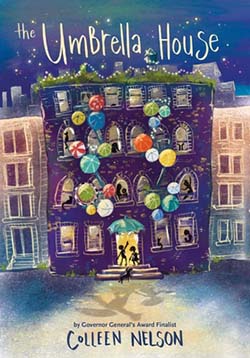
THE UMBRELLA HOUSE
written by Colleen Nelson, (Pajama Press, June 2023, $18.95, ISBN 978-1-+77278-279-0), 224p, Ages 11+
Seventh grade friends Roxy Markowski and Scout Chang-Poulin live in the Umbrella House, an aging co-op in New York City’s East Village. With Roxy’s skills of research and writing and Scout’s photography, video, and editing abilities, they post information about East Village life on their YouTube channel, EaVillKids. They discover that a real estate developer is planning to tear
the Umbrella House down, but the city council’s permission is required. To reveal this atrocity, Roxy and Scout decide to enter a Young Voice competition by Veracity News. Not only will they make a name for themselves but also reveal the plight of the Umbrella House through a video of the residents and their love for art, community, and family.
When Roxy discovers the identity of the anonymous Midnight Muralist, a famous East Village artist whose murals once saved buildings from destruction, the residents are excited. Find out how Roxie, her grandmother, Scout and his two moms, bookstore owner Miguel, artist Ortiz, and musician Lenny and other concerned residents join forces to save their home from unwanted gentrification. With time running out and limited options, they wonder if their efforts will convince the city council to stop the takeover.
Based on a true story, readers will love these two creative kids and their efforts to save their East Village apartment building and city landmark. Photo, map, and Author’s Note are included.
Themes: Adventure, Families, Friendship, Values
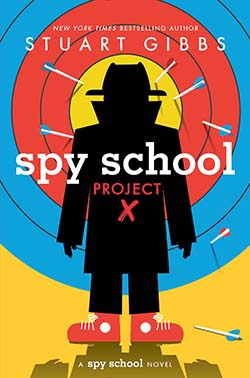
SPY SCHOOL Project X
written by Stuart Gibbs, (Simon & Schuster, Sept. 2022, $17.99, ISBN 978-1-5344-7949-4), 352p, Ages 10-13
This tenth book in the popular Spy School series, finds Ben Ripley, spy in training, racing across America to avoid multiple assassins brought on by Murray Hill’s 21-million-dollar price on his head. By using fringe groups and conspiracy theorists on the internet to target Ben, Murray’s revenge is greater than ever with villains around every corner. Friends try to help, but it’s Erica who suspects Murray. Ben realizes that even if Murray is stopped, his destiny is compromised, and relocation may be required. Readers will enjoy the action sequences, constant suspense, and over the top humor.
Themes: Adventure, Heroes, Humor, Mysteries, Suspense Series
Other Books in the Series: Spy School |Spy Camp | Evil Spy School | Spy Ski School | Spy School Secret Service | Spy School Goes South | Spy School British Invasion | Spy School Revolution |Spy School at Sea
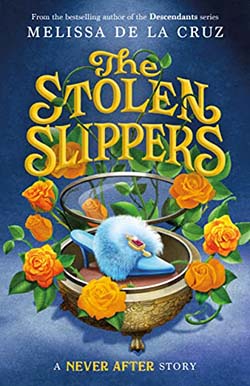
NEVER AFTER: THE STOLEN SLIPPERS (The Chronicles of Never After)
written by Melissa De La Cruz, illus. by James Madsen, (Roaring Brook Press, $16.99, Feb. 2022, ISBN 978-1-250-31123-8), 336p, Ages 10-14
“Tossed back into the not-so-familiar fairy tale world of Never After, Filomena Jefferson-Cho and her friends set off on another adventure. . . this time in search of Cinderella’s glass slipper. Or rather, glass slippers.
It turns out the classic story of Cinderella is full of lies—starting with how Cinderella herself is far from the innocent heroine everyone thinks she is. She’s manipulative and cunning---willing to do anything to be the princess of Eastphalia. The real heroines of her story are her “wicked” stepsisters, Hortense and Beatrice, who aren’t actually wicked at all!
With the help of the dashing Jack talker, adorable Alistair, and glamorous Gretel, Filomena must track down the slippers, which may be the key to a certain mysterious prophecy. But when Filomena and Beatrice get tossed into the Beast’s dungeon, all hope seems lost. Will the conniving Cinderella shatter everyone’s hopes for a true, un-twisted ending? Or will Filomena and her friends secure the happily ever after Cinderella’s stepsisters deserve?”
Pub Syn
Themes: Adventure, Families, Friendship, Folk Literature, Heroes, Series
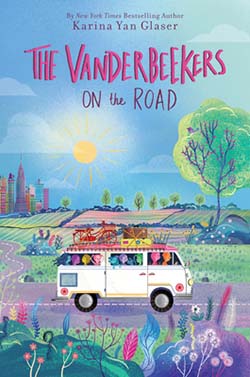
THE VANDERBEEKERS ON THE ROAD
written by Karina Yan Glaser, (Houghton Mifflin Harcourt, $16.99, Sept. 2022, ISBN 978-0-358-43457-3), 352p, Ages 9-12
In an amazing cross country road trip, the Vanderbeekers pile into a borrowed van and hit the road to Indiana, where they pick up their dad for his 40th birthday and recreate his long ago missed vacation cross the states to California. Along with mama and the five kids, their neighbors Mr. Beiderman and Orlando, decide to join them as well. Franz the dog, Tuxedo, the cat, and Peaches and Cream, two sister cats they were bringing to Aunt Penny in California tag along as well.
The Vanderbeekers make new friends, discover a stowaway chicken, visit several national parks, deal with wet tents, creepy campgrounds and an overheated vas along the way.Readers will enjoy this one-of-a-kind vacation from New York to California, all the hijinks along the way, and feel like they’re part of this warm and loving Vanderbeeker family.
Themes: Adventure, Families, Friendship, Heroes, Humor, Series
Other Books in the Series: The Vanderbeekers of 141st Street #1 | The Vanderbeekers and the Hidden Garden #2 | The Vanderbeekers to the Rescue #3 | The Vanderbeekers Lost and Found #4 | The Vanderbeekers Make a Wish #5

SHERLOCK HOLMES THE FINAL PROBLEM
written by Sir Arthur Conan Doyle, illus. by Hannes Binder, (NorthSouth Books, $18.95, April 2023, ISBN 978-0-7358-4488-9), 56p, Ages 10+
This adaptation of Arthur Conan Doyle’s last planned story in the Sherlock Holmes mystery series is short but stunning with its scratchboard illustrations. Narrated by Dr. Watson, the story begins with a visit by Sherlock Holmes to Dr. Watson, requesting his presence on a journey for a week to the Continent to apprehend Holmes’ archenemy, Professor Moriarty. “He sits like a spider at the center of a giant web of intrigue, spreading wickedness wherever he can. And he is a master of disguise. In brief, Moriarty is a genius of evil, the Napoleon of crime.”
The two men make intricate plans to evade Moriarty and his men on their journey to Switzerland. At the famous Reichenbach Falls in the Alps, the two men are separated by a medical emergency at their hotel, which requires Dr. Watson’s attention. Agreeing to meet later at the hotel, Holmes continues, but when Dr. Watson returns to the Falls, Sherlock has disappeared.
Readers will be astounded by the surreal illustrations that set the tone for dramatic, graphic retelling of Conan Doyle’s supposedly last Sherlock Holmes mystery. End pages feature information of Arthur Conan Doyle’s mysteries after “The Final Problem” and a short biography of Sir Arthur Conan Doyle.
Themes: Adventure, Friendship, Graphic Novel, Mysteries
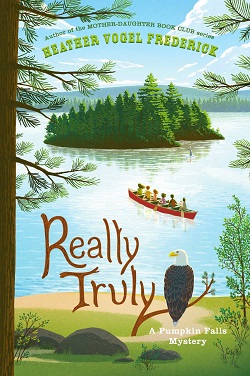
REALLY TRULY: A Pumpkin Falls Mystery
written by Heather Vogel Frederick, (Simon & Schuster Books for Young Readers, 2020, ISBN 978-1-5344-1437-2), 368p, Ages 10-13
“Truly Lovejoy is excited for the perfect summer in Pumpkin Falls, New Hampshire: swim practice outside, working at the family bookstore, one-on-one time with her mom, and best of all, time with the dreamy R. J. Calhoun who may just like Truly back. But her plans fall apart when she’s sent off to mermaid academy—sparkly tail and all.
Luckily, a mystery is never too far behind the Pumpkin Falls Private Eyes, and this one might just encourage Truly to come out of her shell, in more ways than one.”
Pub Syn
Themes: Adventure, Families, Mysteries, Series
Other Books in the Series: Absolutely Truly #1 | Yours Truly #2
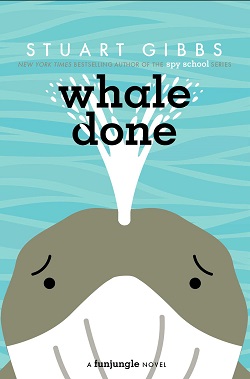
WHALE DONE
(FunJungle Series)
written by Stuart Gibbs, (Simon & Schuster Books for Young Readers, $17.99, Feb. 2023, ISBN 978-1-5344-9931-7), 320p, Ages 10-13
“After an escaped kangaroo starts a fire that burns down his house, Teddy Fitzroy accepts an invitation to go to Malibu with his girlfriend, Summer, and her mother, Kandace. He’s hoping to spend some time
relaxing on the beach, but wherever Teddy goes, trouble isn’t far behind.
First, a massive dead whale has washed up on the beach—and before anyone can determine what killed it, it explodes. Doc, the head vet from FunJungle, suspects something fishy is going on and ropes Teddy and Summer into helping him investigate.
Then Teddy stumbles upon yet another mystery involving tons of stolen sand. And the paparazzi start spreading rumors about Summer dating a celebrity, leaving Teddy to question their relationship. Without Summer as his trusted partner, can Teddy navigate the rough waters of this glitzy world and uncover what’s going on?”
Pub Syn
Themes: Adventure, Friendship, Humor, Mysteries, Series
Others in the series: Belly Up#1 | Poached #2 | Big Game #3 | Panda-monium #4 | Lion Down #5 | Tyrannosaurus Wrecks #6 | Bear Bottom #7
Notables Ages 12-15
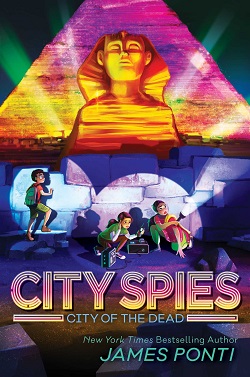
CITY SPIES: City of the Dead
written by James Ponti, (Aladdin, $18.99, Feb. 2023, ISBN 978-1-6659-1157-3), 400p, Ages 12+
This fourth installment of The City Spies series finds the five young MI6 Secret Agents investigating a series of cyberattacks at the London British Museum. Kat, the quietest of the five young spies and known for her logic and patterns in chaos, takes charge of the mission. Following clues and deciphered messages, Kat and her now adopted sisters and
brothers travel from London to Berlin and ultimately to Egypt’s Valley of the Kings and the City of the Dead, hot on the heels of the suspected enemy, Umbra.
A surprising addition to the team suddenly appears and the City Spies must learn to accept him. Readers will enjoy the interesting history surrounding the discovery of the Egyptian boy king, Tutankhamen’s tomb, the undercover taxi driver, and, of course, the Motherisms: “Courage doesn’t end at the start; it’s always there within your heart.”
Themes: Adventure, Families, Friendship, Heroes, Humor, Mysteries, Series, Suspense
Other Book in the Series: City Spies #1 | Golden Gate #2 | Forbidden City #3
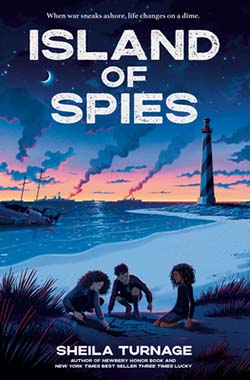
ISLAND OF SPIES
written by Sheila Turnage, (Dial Books for Young Readers, $17.99, Sept. 2022, ISBN 978-0-735-23125-2), 384p, Ages 11+
The year is 1942 and twelve-year-old Sarah Stickley Lawson, along with friends, Rain and Neb, (aka the Dime Novel Kids) live on Hatteras Island in North Carolina at the beginning of World War II. They love to solve mysteries while awaiting a call from the FBI. Using the abandoned Hatteras lighthouse as a lookout for U-Boats, enemies, and local spies, little do they realize that their lives, as well as the families on the island, are about to about to be upended. Newcomers appear on the island, German U-boats are bombing cargo ships off the coast, Stick’s father goes missing, and the town’s postmistress may be a spy.
Readers will enjoy the clever sayings throughout the story. “Time stopped by, pulling summer toward us like a kid pulls a red wagon,” “Only bad news and strangers use the front door.” Humor, mysteries, and wartime adventures will have kids on the edge of their seats in this entertaining saga of island life during a little-known era of American history.
Themes: Adventure, Families, Friendship, Heroes, Humor, Mysteries
Other Book in the Series: Three Times Lucky | The Ghosts of Tupelo Landing | The Odds of Getting Even | The Law of Finders Keepers
The Children's Hour was created to promote and encourage reading to children and by children. We believe that reading aloud not only creates a special bond between parents and children, but it is important to the development of their imagination and curiosity.
The Children's Hour
6497 Bellcross Trl
Whitsett, NC 27377
626-393-5899
Conditions of Use
Privacy Policy